
Turning my real estate service offering into a luxury experience led to higher ticket clients who pay a premium to partner with me. This is how I did it…
I was 24 when I first stepped inside a Christian Dior boutique.
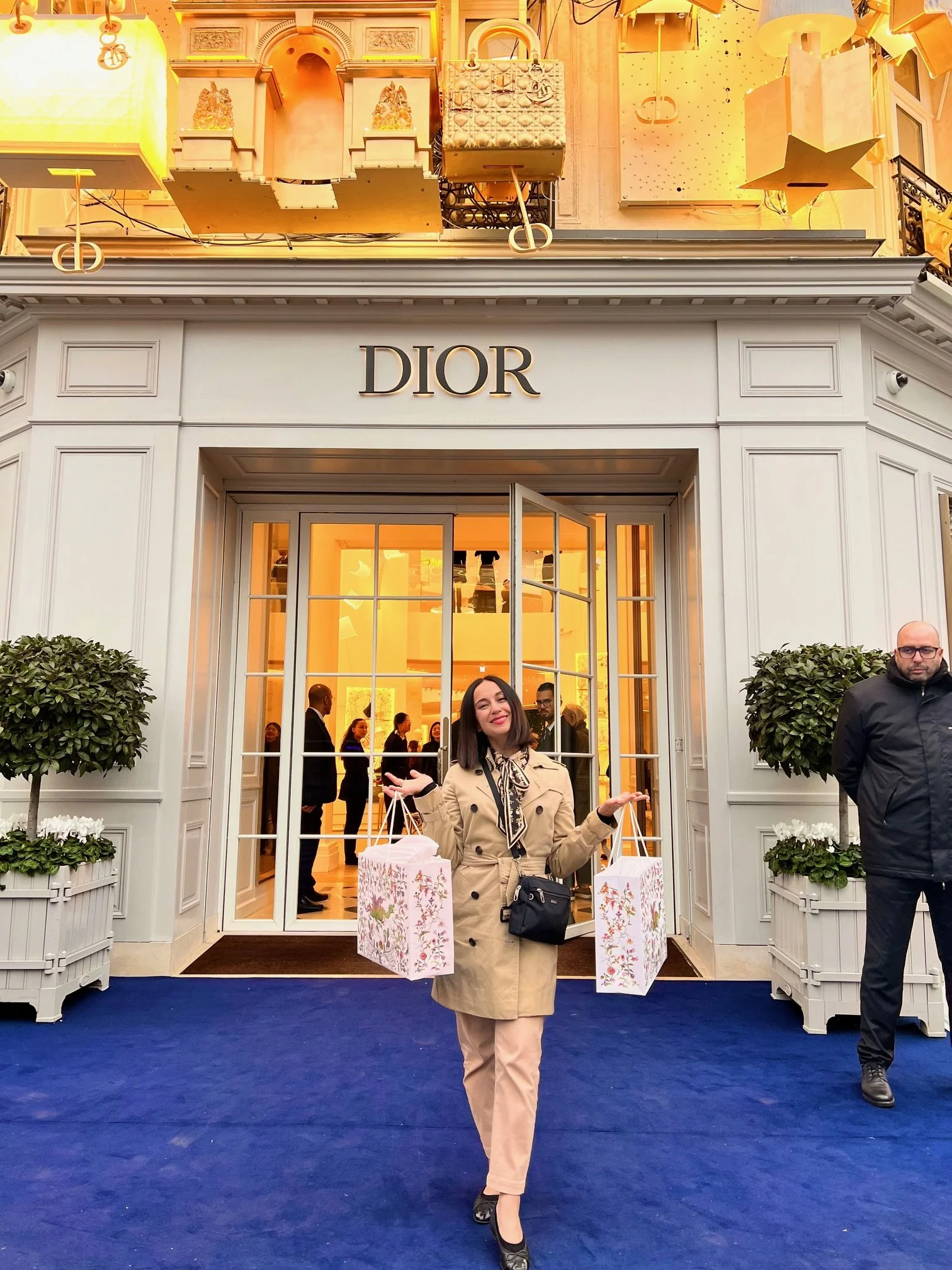
So you can imagine how I felt almost 20 years later, walking through the doors of the flagship store in Paris (pictured above).
I'd always loved the brand, but as a teenager, I never imagined I'd one day be able to walk into one of those boutiques and actually afford the handbag I'd had sitting on my vision board.
But here I was. Credit card at the ready, practically buzzing with anticipation of that delicious retail therapy sugar rush.
I walked out with a rather cute little pink purse, which set me back around $1,300.
I still have it today. The same style would cost more than double now, but that hasn't stopped me going back for more.
Which brings me to an interesting question.
Why?
Why Do We Buy Luxury?
Why do people willingly spend thousands of dollars on a handbag, a pair of shoes or a watch when they could purchase something that serves exactly the same practical purpose for a fraction of the price?
And more importantly, what does this have to do with running a successful business?
Here's the thing.
Luxury isn't necessarily about the monetary value of an item. It's about how that item makes you feel.
It's the experience of walking into a beautifully appointed boutique, being greeted by someone who knows the brand, taking your time to browse and being presented with your purchase in that perfectly wrapped little box.
It's the anticipation, the presentation and the feeling of having purchased something special.
Of course, there's also the brand itself.
Owning a particular handbag, driving a certain car or staying at a particular hotel can communicate something about who we are, what we value and the lifestyle we aspire to.
Luxury brands understand this exceptionally well.
They're not simply selling products. They're selling an experience, an identity and an association with something desirable.
And here's where things get interesting for those of us running service-based businesses.
The same psychology applies to the services we sell.

The Dior Museum — Paris.
Dior candy. I visited the Dior Museum in November 2024 and it was undoubtedly the highlight of my trip.
Want to Charge More? Start Thinking Like a Luxury Brand.
If you want to command higher fees, attract more discerning clients and move away from competing on price, you need to think carefully about how your business is positioned.
Because there's a significant difference between selling a service and selling a premium experience.
A client might be able to find another buyer's agent, accountant, consultant or financial adviser who offers a similar service for less money.
But if they perceive your expertise, personal brand and client experience as being in a different league, the comparison becomes much less about price.
They aren't simply paying for the deliverable. They're paying for the confidence, convenience, expertise and level of service that comes with working with you.
And that's where the opportunity lies.
You don't necessarily need more clients to increase your revenue. You may simply need to reposition what you offer, improve the experience you deliver and attract people who genuinely value the difference.
Here's how I incorporate some of these principles into my own business.
1. Create Exclusivity Through Access
One of the most interesting characteristics of luxury brands is that they don't make everything available to everyone.
Access is often carefully managed. Certain products are difficult to obtain, appointments are required and the experience feels considered rather than transactional.
The psychology behind this is worth understanding.
When something is readily available to everyone, it can feel less exclusive. When access is more considered, it can create a sense of desirability.
I've adopted a similar approach in my business.
For example, I don't publicly display my mobile number across every marketing channel or make myself endlessly accessible to anyone who happens to come across my website.
Instead, I manage how prospective clients make contact and how I allocate my time.
This isn't about being deliberately difficult to reach or making clients jump through unnecessary hoops. It's about establishing a professional process and protecting the time required to deliver an exceptional service.
It also means I'm not spending my afternoons fielding unsolicited sales calls or responding to enquiries that aren't aligned with the business I'm building.
The people who become clients understand that they're engaging with me directly and that my time and attention are part of the value they're paying for.
Exclusivity isn't about making people feel unimportant. It's about making the right people feel valued.
2. Work With Fewer Clients
This is one of the biggest shifts I've made in my business over the years.
For a long time, the conventional thinking in real estate was that growth meant more clients, more transactions, more staff and ultimately more volume.
But what if you don't actually want that?
What if you'd rather work with a smaller number of exceptional clients, deliver a more personalised service and charge appropriately for the expertise you bring to the table?
That's the model I've gravitated towards.
By deliberately limiting the number of clients I work with at any one time, I can give each engagement the attention it deserves.
It also allows me to be more selective about the work I accept and ensures that my capacity aligns with the level of service I want to deliver.
There's an important distinction here: limiting your client numbers only creates value when there's genuine demand for your expertise and a clear reason why clients should want to work with you.
Simply declaring yourself exclusive doesn't make you a premium brand.
Your reputation, experience, results and client experience need to support that positioning.
But when they do, you can move away from the constant cycle of chasing new business, negotiating fees and trying to convince people why they should choose you.
You become much more intentional about who you work with.
And that's a very different way to run a business.
3. Elevate the Entire Client Experience
This is where I believe many professionals miss the mark.
They want to charge premium fees, attract high-net-worth clients and position themselves as an authority in their field, but their actual service experience looks almost identical to everyone else's.
Think about the last time you purchased something from a luxury brand.
It probably wasn't just the product that made the experience memorable. It was the attention to detail, the presentation, the communication and the way you were made to feel throughout the process.
Now apply that thinking to your own business.
From the first enquiry through to the final delivery, every interaction contributes to how a client perceives your value.
Consider things like:
Your first point of contact: Is the enquiry process professional, considered and easy to navigate?
Your communication: Are you proactive, responsive and thoughtful, or are clients left wondering what's happening?
Your presentation: Does your website, marketing material and personal brand reflect the calibre of service you're offering?
Your processes: Are they organised, seamless and designed around the client experience?
Your attention to detail: Do you remember the little things that make clients feel genuinely looked after?
Your delivery: Does the actual service live up to the expectations you've created?
You don't need to spend a fortune on expensive packaging, designer stationery or a fancy office.
You do, however, need to be intentional about the experience you're creating.
Premium positioning is built through consistency. Every touchpoint should reinforce the same message about the quality of your business.
4. Stop Competing on Price
If you're constantly having conversations about your fees, perhaps it's time to look at how you're positioning your service.
When a prospective client sees your offering as interchangeable with everyone else's, price becomes an obvious point of comparison.
But when they recognise a clear difference in your expertise, approach, reputation and service, the conversation changes.
This is particularly important in industries like real estate, where clients are making significant financial decisions and the cost of getting something wrong can be substantial.
Your job isn't to convince everyone that you're worth more.
It's to communicate your value clearly enough that the right clients understand why working with you is different.
And that requires confidence.
You need to be comfortable owning your expertise, standing behind your fees and recognising that not every prospective client is your ideal client.
Sometimes, the most valuable business decision you can make is being prepared to walk away from an opportunity that isn't right for you.
Ready to Position Yourself as a Premium Brand?
There's a mindset shift involved in moving from being another service provider in a crowded marketplace to becoming someone clients actively seek out.
It requires more than changing your website, increasing your fees or adding the word luxury to your marketing.
You need to understand how you want to be perceived, who you want to attract and what needs to change within your business to support that positioning.
You also need the confidence to operate differently from the standard.
In my Business and Career Coaching Program, I work with ambitious real estate professionals on exactly these areas.
We explore strategic positioning, personal brand development, commercial confidence and the mindset required to attract higher-calibre clientele and build a more profitable business.
Because the objective isn't simply to charge more.
It's to build a business where your expertise is recognised, your time is valued and your fees reflect the quality of what you deliver.
You don't need to be the cheapest, the busiest or the most accessible professional in your industry. You need to become the one the right clients are prepared to pay a premium to work with.
If you'd like to explore this further, we unpack more of the psychology and practical strategies behind luxury positioning in the podcast episode below.
